
English| EUR
Suggested for you
More currencies
Choose a language
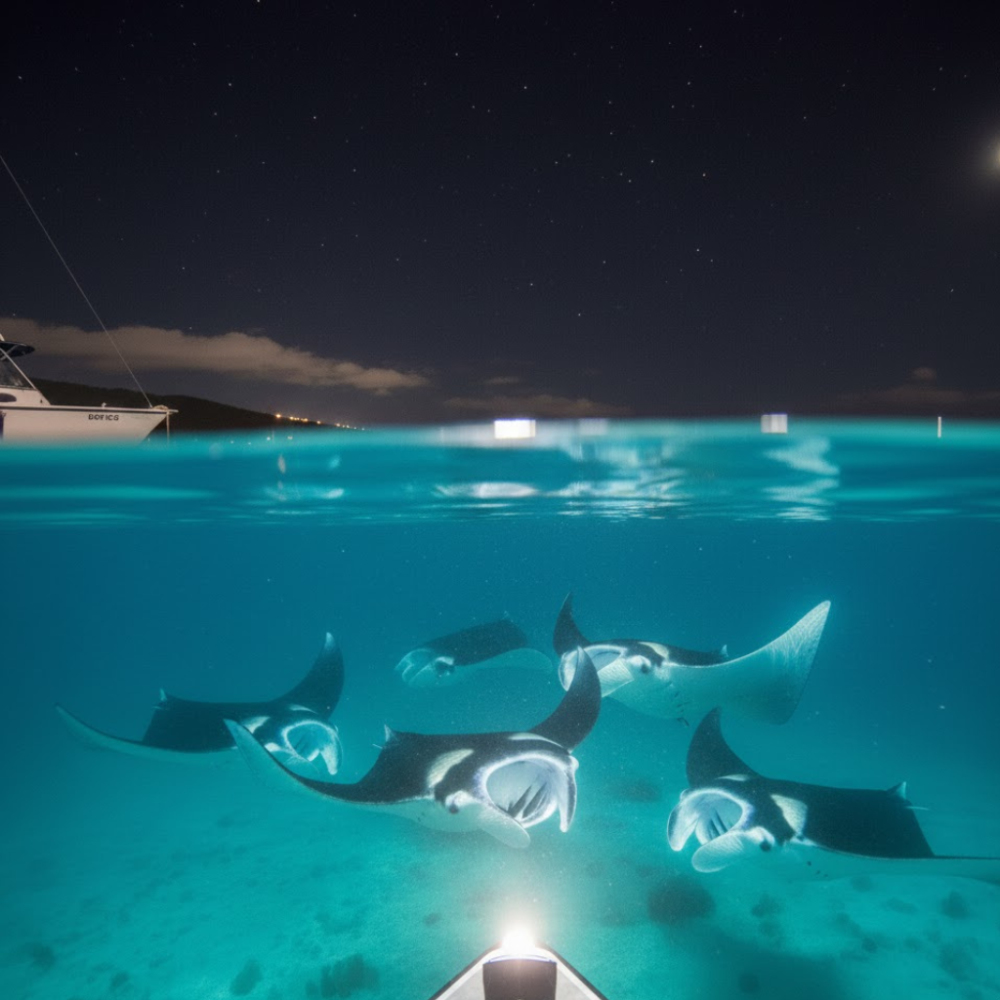
Hawaii's manta ray night snorkeling happens at two primary sites off the Kona coast of the Big Island. Both require commercial tour access, and both deliver close encounters with feeding mantas drawn to underwater lights after sunset.
Quick answer
The two established sites where to swim with manta rays in Hawaii are Keauhou Bay (also called Manta Village) and the waters near Honokohau Harbor, both located along the Kailua-Kona coastline on the Big Island. Ocean access is free, but reaching the snorkel sites requires booking a commercial tour that departs from either Keauhou Bay or Honokohau Harbor between 17:30 and 20:30. Both locations offer near-guaranteed sightings during plankton blooms, though water conditions and manta presence vary nightly.
Manta rays aggregate at only two accessible sites in Hawaiian waters where predictable plankton concentrations and shallow reef structure create ideal feeding conditions. These locations are not beaches or shore-entry points—they are offshore zones reached exclusively by boat. Keauhou Bay, the southern site, sits in a sheltered cove where volcanic rock and coral structure create natural plankton funnels. Tour operators anchor above a sandy bottom at depths between 30 and 40 feet, positioning underwater lights that attract zooplankton and, in turn, the mantas that feed on them. The bay's protection from open-ocean swell makes it the more reliably calm site, though manta presence fluctuates with lunar cycles and seasonal plankton density. Honokohau Harbor serves as the departure point for the northern site, located in deeper water off the Kona coast. This site attracts larger aggregations during peak plankton blooms but experiences more variable surface conditions due to its exposure to prevailing trade winds. Both sites operate under the same temporal window: tours depart in late afternoon and position snorkelers in the water after sunset, when plankton rise toward the surface and mantas begin their nightly feeding circuits. The experience is identical in structure—snorkelers hold a floating platform equipped with submerged lights while mantas perform barrel rolls and filter-feeding passes inches away—but the two locations differ in topography, depth, and typical group size. Keauhou Bay permits smaller tour groups due to its limited anchoring space, while the Honokohau site accommodates multiple boats simultaneously. Commercial tour operators hold the permits required to guide visitors to these sites. Independent shore access does not exist; the sites lie beyond safe swimming distance from land, and the necessary lighting equipment is not available for personal use. Tour selection determines departure harbor, group size, and in some cases the specific site visited, as operators adjust nightly based on reported manta activity and weather. The manta rays themselves are wild and unbaited—they appear because the plankton does, not because tour schedules dictate it—but sighting rates at both locations consistently exceed 90 percent across the season.
“These are not beaches or shore-entry points—they are offshore zones reached exclusively by boat.”
Manta rays are present in Hawaii year-round, making the primary consideration for your visit the daily arrival window. The optimal arrival window is 17:30–20:30, as this period provides the darkness necessary to attract plankton, which draws the rays for night feeding.
Warm, 80-85°F
Stable water conditions often result in high visibility for viewing.
Cooler, 74-78°F
Occasionally rougher seas may impact transit, though ray activity remains consistent.
Mild, 78-82°F
These months offer a balance of calm water and fewer crowds.
Verdict: The best time to swim is during the shoulder months of April or October, arriving within the 17:30–20:30 window.
Manta ray snorkeling sites are located off the coast of Kailua-Kona. Access to these ocean locations is restricted to commercial boat tours departing from Keauhou Bay and Honokohau Harbor.
Queen Kaahumanu Hwy to Honokohau Harbor
Alii Drive to Keauhou Bay
Commercial tour vessel from harbor to site
Plan to arrive at your designated harbor location well in advance of your boat departure time. Parking is available at both Keauhou Bay and Honokohau Harbor, but spaces fill quickly near launch points.
Access to the ocean for manta ray viewing is free, as these are public waters. However, participation in a commercial snorkel tour is the standard logistical requirement for reaching active feeding sites safely.
Verdict: While ocean access is 0 USD, most visitors pay for a commercial tour which varies in price based on the operator and included amenities.
Federal and state regulations protect manta rays from harassment, and tour operators enforce strict protocols to minimize human impact on nocturnal feeding behavior. Following these rules preserves the habitat and ensures continued access to this research site.
Everything you need to know about where to swim with manta rays in hawaii
The primary spots to swim with manta rays in Hawaii are located at Keauhou Bay and Honokohau Harbor in Kailua-Kona. These locations provide the calm, nutrient-rich waters that these gentle giants prefer for nighttime feeding. Many visitors seek out where to swim with manta rays in hawaii to experience these marine animals in their natural habitat.
Yes, access to these snorkeling sites requires a commercial tour. Professional operators provide the necessary safety equipment and specialized light boards used to attract plankton. Knowing where to swim with manta rays in hawaii involves relying on these experienced local guides.
The best arrival window for these activities is 17:30–20:30. This timeframe provides the optimal darkness and environmental conditions to encourage consistent feeding activity. Planning your arrival during this window is a key part of learning where to swim with manta rays in hawaii.
There is a 0 USD entrance fee to access the ocean itself. However, because specialized gear and boat access are required, you will need to reserve a commercial tour for the experience. The ocean remains open to the public, though the logistical nature of these night excursions makes organized tours the standard approach.
Most tour operators allow children to participate if they are comfortable in the water and can follow safety instructions. It is recommended to check with individual providers regarding specific age or swimming ability requirements. Safety protocols are strictly enforced for all participants regardless of age.
You should bring swimwear, a towel, and a light jacket for the boat ride back, as it can get chilly after dark. Most tour companies provide snorkeling gear, wetsuits, and light boards as part of their service package. Check your specific booking details to see what is included in your gear list.
Manta rays feed by filtering plankton from the water column. The bright lights used during tours act as a beacon, concentrating the plankton and drawing the rays close to the surface for easier viewing. This natural feeding behavior is why these night tours are so successful for observers.