
English| EUR
Suggested for you
More currencies
Choose a language
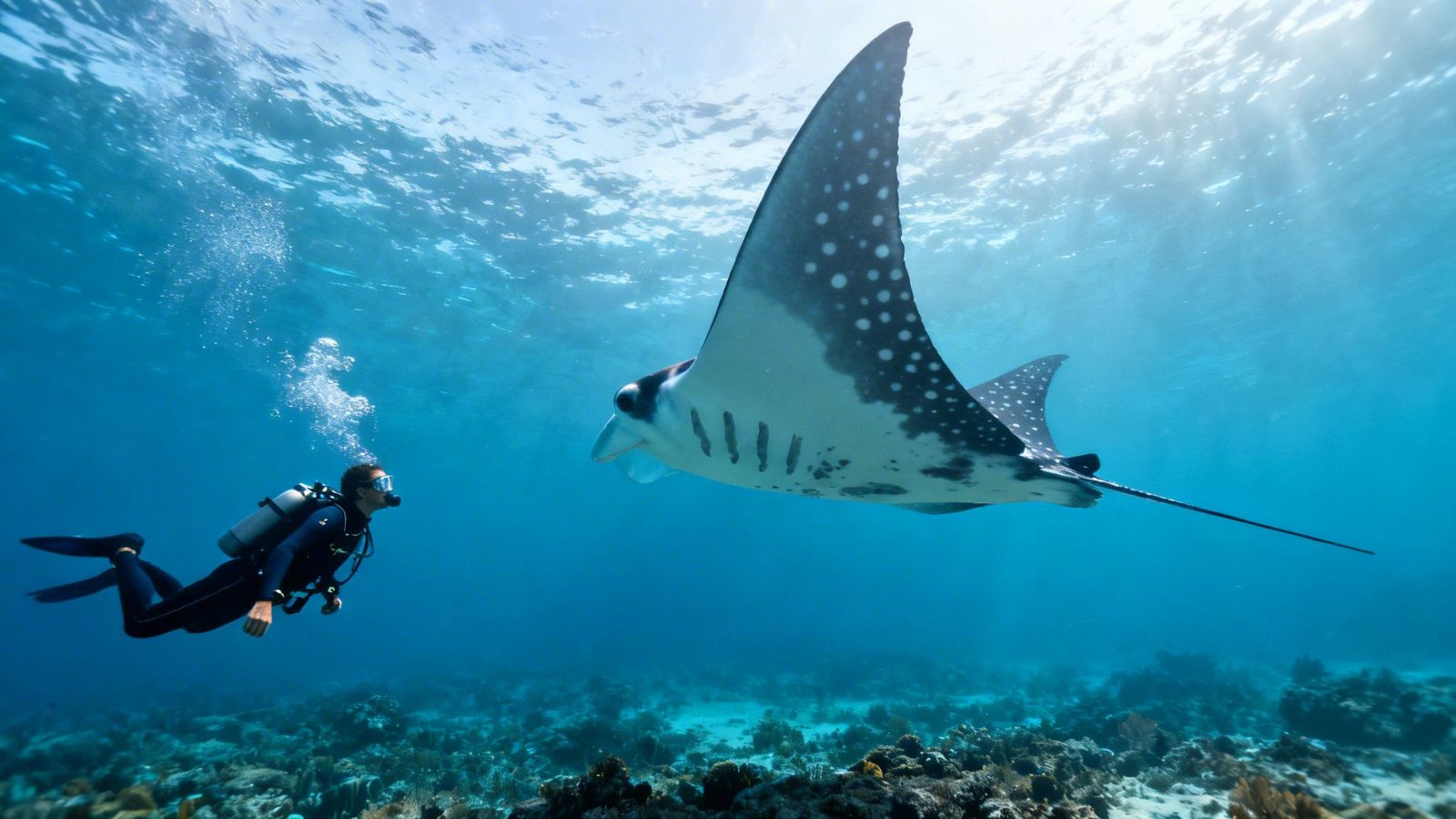
The manta rays that glide through Hawaii's night waters range from sedan-sized reef mantas to oceanic giants with wingspans wider than a school bus. Knowing which species you will encounter—and how their size translates to the in-water experience—helps set realistic expectations for your first close approach.
Quick answer
Reef manta rays, the species encountered on Kona night snorkel tours, typically measure 10 to 12 feet from wingtip to wingtip and weigh 600 to 1,400 pounds. Oceanic manta rays, occasionally spotted in deeper offshore waters, reach 18 to 23 feet in wingspan and can exceed 3,000 pounds. Both species are filter feeders with no stinger, and their size becomes less intimidating once you observe their slow, balletic feeding movements beneath the lights.
A twelve-foot reef manta ray weighs roughly the same as a grand piano, yet it moves through water with the effortless grace of a bird riding a thermal. The reef manta—Mobula alfredi—is the species that congregates nightly off Keauhou Bay and Honokohau Harbor, drawn to plankton clouds illuminated by tour-boat lights. These animals feed with mouths agape, each measuring up to four feet wide when fully extended, filtering seawater at a rate that can exceed 60 gallons per hour. A mature female might span eleven feet and weigh 900 pounds; a large male can push thirteen feet and 1,500 pounds, though individuals above twelve feet are uncommon in Hawaiian waters. Wingspan alone tells an incomplete story. Thickness matters too. A manta ray's body tapers to edges no thicker than a human palm, giving the animal a two-dimensional appearance when viewed from the side. That flattened profile allows mantas to maneuver in tight barrel rolls, a behavior frequently observed when multiple individuals compete for position beneath a light source. The cephalic fins—forward-facing lobes flanking the mouth—add another 18 to 24 inches to the animal's effective width during feeding, channeling plankton-rich water into the mouth. How big are manta rays in Hawaii compared to their oceanic cousins? The oceanic manta—Mobula birostris—dwarfs the reef species, with confirmed wingspans exceeding 23 feet and unverified reports approaching 29 feet. These deep-water transients appear sporadically in Kona, usually in summer months when pelagic plankton blooms drift closer to shore. A 20-foot oceanic manta can weigh 2,800 pounds, equivalent to a compact car. The size difference becomes obvious when both species share the same feeding zone: the oceanic manta's shadow eclipses two or three reef mantas swimming beneath it. Size varies by age and sex. Female reef mantas grow larger than males, reaching maturity at ten to eleven feet after roughly eight years. Males mature earlier, at seven to eight feet and five to six years old. Juveniles—animals under six feet—are rarely seen on night snorkel tours, as they tend to feed in shallower daytime zones where plankton density is lower but predation risk from tiger sharks is also reduced. The average wingspan encounters on a Kona night tour falls between 10.5 and 11.5 feet, a size that feels enormous when the animal passes two feet above your head yet never threatening once you understand the manta's feeding mechanics and predictable flight path.
“A twelve-foot reef manta ray weighs roughly the same as a grand piano, yet it moves through water with the effortless grace of a bird riding a thermal.”
The reef manta ray (Mobula alfredi) is the primary species encountered in Hawaiian waters, known for its resident coastal behavior. These gentle giants typically feature a large wingspan and are highly intelligent filter feeders.
10 to 14 feet average size
Up to 1,860 pounds
2 to 3 feet at birth
Largest brain-to-body ratio in fish
Lifespan of up to 45 years
The best arrival window is 17:30–20:30, which aligns with the nighttime plankton feeding activity that draws these large creatures to the surface. Observing them during this period ensures optimal darkness for spotting them as they congregate in the water.
Stable warm conditions throughout the year
—
Water temperatures average 78–80°F
Water temperatures average 74–77°F
Verdict: The optimal time for viewing is any day of the week between 17:30 and 20:30, regardless of the season.
Access to the open ocean for manta ray viewing carries no direct admission fee. Costs are instead determined by the commercial tour vessel required to reach the primary feeding sites.
Verdict: While ocean access is 0 USD, visitors must pay commercial operators for boat passage to reach the snorkeling locations.
Most manta ray snorkeling excursions depart from Keauhou Bay or Honokohau Harbor in Kailua-Kona. Visitors should plan to arrive by car, as public transit does not serve these harbor locations directly.
Highway 11 to Keauhou Bay
Highway 19 to Honokohau Harbor
Direct service to harbor entry points
Plan your arrival for the best arrival window of 17:30–20:30. Parking at both harbors can fill quickly, so allow extra time to locate a space before your scheduled departure.
Everything you need to know about how big are manta rays in hawaii
In Hawaiian waters, the reef manta rays typically have a wingspan ranging from 5 to 12 feet, though some individuals may grow larger. Understanding how big are manta rays in hawaii helps visitors appreciate the scale of these gentle giants during nighttime encounters.
While there is variation among individual animals, most manta rays encountered during local snorkel tours measure between 7 and 10 feet across. Researching how big are manta rays in hawaii often reveals that females are generally larger than males.
Manta rays are filter feeders that consume microscopic plankton and do not have stingers, making them safe to observe. Even considering how big are manta rays in hawaii, these creatures are famously docile and curious toward swimmers.
The best time for viewing is during the arrival window of 17:30–20:30, which aligns with their natural feeding cycles after sunset. This evening period provides the optimal darkness required for the plankton to congregate and attract the rays.
There is 0 USD entrance fee for access to the open ocean, though you must book a commercial tour boat to reach the viewing sites. These excursions are necessary to safely access the waters near the designated harbors.
Most operators allow children to join tours, provided they are comfortable in the water and can follow safety instructions. It is recommended to check specific boat requirements to ensure the experience is suitable for your family.
Tours primarily depart from Keauhou Bay and Honokohau Harbor in Kailua-Kona. These harbors serve as the primary access points for boat operators traveling to the manta feeding grounds.