Manta Ray Snorkeling Hawaii
Tours & tickets

Hand-picked by our editors — only the best 5 night snorkel experiences from 23 reviewed.

Open today 00:00–23:59
Attendance: Moderate — autumn shoulder season
Conditions optimal for manta ray dive hawaii tours in current evening darkness.
Free cancellation Instant confirmation Mobile voucher Verified partner Small group sizes
Tickets

Choose your ticket

Verified partners for every tour, free cancellation where available, and instant confirmation on every booking.

Nighttime Manta Ray Boat Adventure 2 hr
Standard Entry

Nighttime Manta Ray Boat Adventure

★ 4.8 (603)
€66
per person
Instant Mobile voucher Flexible — change up to 24h

Glide through dark Hawaiian waters and witness graceful manta rays performing their nocturnal ballet

Reserve
Night Manta Ray Snorkel Adventure with Hot Chocolate 1 hr 15 min
Standard Entry

Night Manta Ray Snorkel Adventure with Hot Chocolate

★ 4.8 (446)
€129
per person
Instant Mobile voucher Flexible — change up to 24h

Glide alongside giant manta rays in Hawaii's illuminated waters after dark on this unforgettable snorkel cruise

Reserve

Prices from verified partners. Availability updates in real time at checkout. Free cancellation policies apply where shown.

What you'll do

Inside a tour, step by step

  1. 01 30 min

    Check-in

    Arrival at designated boat ramp or harbor.

  2. 02 20 min

    Boat Transit

    Travel to manta ray dive hawaii feeding sites.

  3. 03 45 min

    Night Snorkel

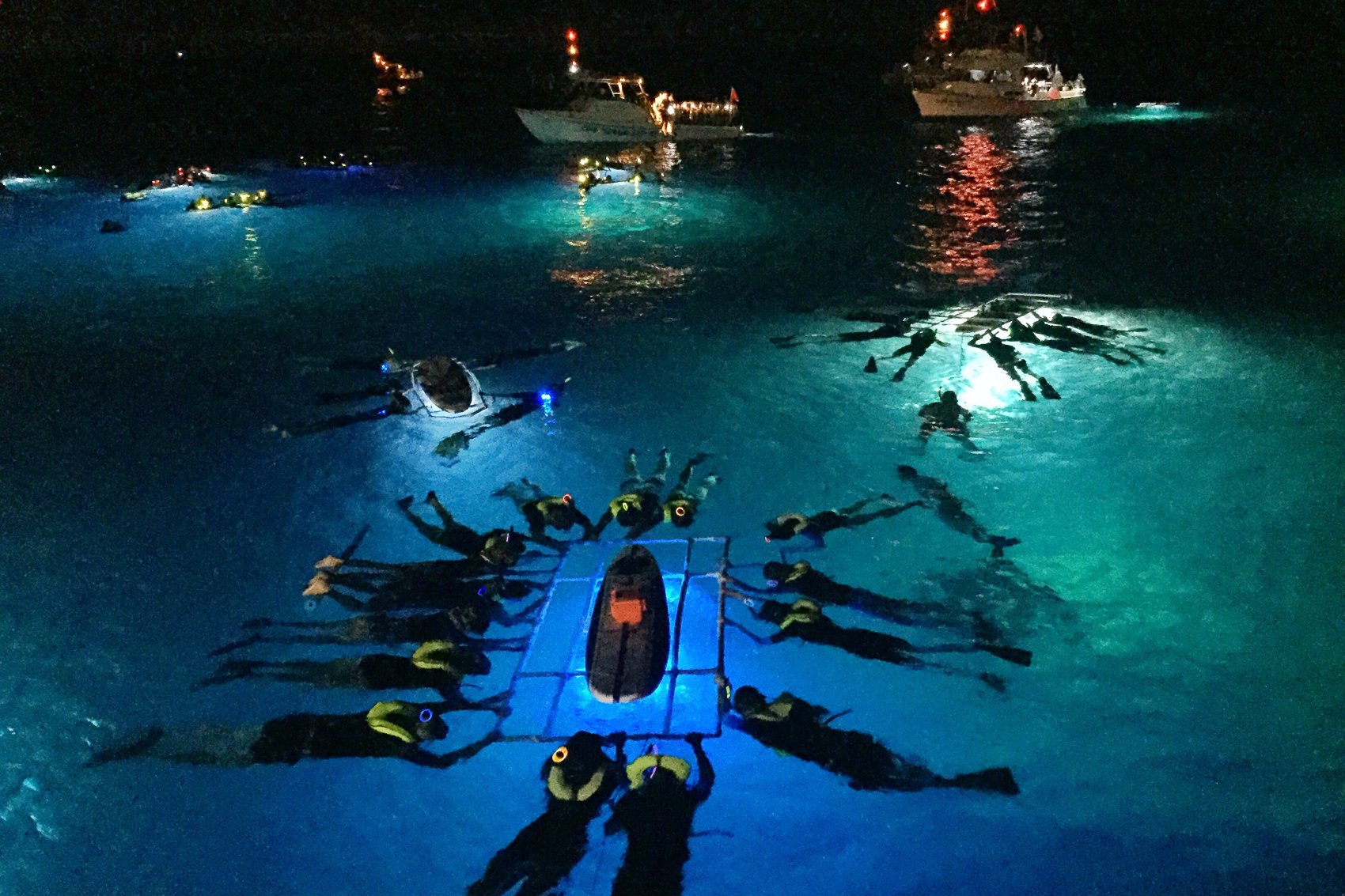
    Guided observation at the manta ray light boards.

  4. 04 20 min

    Return

    Sail back to the harbor under evening skies.

Highlights

What you'll see inside the attraction

The landmarks, rooms, and views travelers on this tour remember — all visible on a single visit.

Manta Village

The site famous for the historical Kona Surf Hotel lights that started the manta feeding tradition.

Manta Heaven

A premier northern site known for high concentrations of mantas during night feeding sessions.

Kaukalaelae Point

The official name of the protected bay area where most night snorkeling encounters occur.

Underwater Light Boards

Innovative tools used by operators to attract plankton and the mantas that feed on them.

Kona Coast Shelf

The unique volcanic topography that supports the nutrient-rich waters essential for manta survival.

Head to head

Snorkeling vs Diving for Manta Ray Dive Hawaii Experiences

Snorkeling offers a dynamic surface-level view of manta ray dive hawaii tours, while scuba diving provides a stationary, immersive perspective on the ocean floor that many enthusiasts find more tranquil.

Feature Top pick Manta Ray Snorkeling Scuba Diving with Manta Rays
Perspective
Seafloor sitting
Interaction Method
Bottom-dwelling with regulators
Required Certification
Open Water certification required
Physical Effort
Low intensity
Depth
20–30 feet (6–9 m)
Accessibility
Limited to certified divers

Verdict: Choose snorkel manta ray dive hawaii tickets for ease of access, or select the scuba option if you seek a closer, more grounded encounter with these gentle giants.

How your ticket works

Book your ticket in 3 steps

  1. 01

    Book online

    Choose your ticket, select your date, and reserve in under two minutes. Secure checkout handled by our verified partner.

  2. 02

    Receive your mobile voucher

    Instant confirmation by email, with a mobile voucher you can save offline. No printing, no queuing at a collection desk.

  3. 03

    Show & enter

    Arrive at the entrance, show your voucher on your phone, and walk in. Most tickets include priority or skip-the-line access.

Plan your visit

Everything you need to know before you go

Practical details for your visit straight from our verified partners — hours, access, rules, and how to get there.

Open today · 00:00–23:59
Opening Hours
Daily 00:00–23:59
Address
Kona Coast, Kailua-Kona, HI, USA
Accessibility
Varies by vessel; consult with commercial tour operator.
Arrival Window
17:30–20:30
Storage
Limited; keep personal belongings to a minimum.
Mon
00:00–23:59
Tue
00:00–23:59
Wed
00:00–23:59
Thu
00:00–23:59
Fri
00:00–23:59
Sat
00:00–23:59
Sun
00:00–23:59
Main entrance

Honokohau Marina

74-380 Kealakehe Pkwy, Kailua-Kona

Primary harbor for many operators

Address
Kona Coast, Kailua-Kona, HI, USA
Storage
Limited; keep personal belongings to a minimum.

How to get there

🚗
Car · Varies · Parking fees may apply

Follow Queen Kaahumanu Hwy to Honokohau Marina or Keauhou Bay.

🚕
Taxi · 20 min · Price varies

Available from most Kailua-Kona hotels to harbors.

Dress code

Wear swimwear and bring a warm layer for the post-snorkel boat ride. Long sleeves are often recommended for comfort in the water.

Bags & security

Keep belongings minimal as boat space is limited. Use a dry bag if bringing cameras or personal items.

Photography

Underwater cameras like a GoPro are recommended for manta ray dive hawaii tour photography. Follow all operator instructions to avoid touching the animals.

Accessibility

Snorkelers must be able to climb a boat ladder and manage ocean conditions. Advise your captain of any mobility limitations before departing for your manta ray dive hawaii excursion.

Mobile phones

Waterproof cases are essential if you plan to keep your phone on board. Connectivity is limited once away from the Kona Coast shoreline.

What to bring

  • Swimwear
  • Towel
  • Warm change of clothes
  • Reef-safe sunscreen
  • Waterproof camera
  • Valid ID

Not allowed

  • Glass containers
  • Flash photography equipment
  • Harassment devices
  • Illegal substances
  • Sharp objects
  • Heavy backpacks
  • Unauthorized drones
  • Large coolers
  • Chemical sunscreen

Families & strollers

Family-friendly manta ray dive hawaii tours require children to be comfortable in the water and able to follow safety instructions. Check minimum age requirements with your specific operator.

Food & drink

Most manta ray dive hawaii tours provide light snacks and hot cocoa. Consumption of alcohol is prohibited before entering the water.

Pets

Pets are not permitted on commercial marine excursion vessels for safety reasons. Service animals require advance coordination with the operator.

Good to know

The 0 USD entrance fee refers to the location, as commercial boat tours determine individual pricing. Always arrive within the 17:30–20:30 window for the best manta ray dive hawaii conditions.

Meeting points

Where to find us

Honokohau Marina

74-380 Kealakehe Pkwy, Kailua-Kona

Primary harbor for many operators

Get directions

Keauhou Bay

Kailua-Kona, HI

Common southern departure point

Get directions
Around your visit

Everything else worth knowing

Best time to go, insider tips, nearby landmarks, and the cancellation fine print — flip through to skim what matters to you.

Best time to visit

How crowds, weather, and events shift across the year.

Autumn

September and October offer calm seas and warm water temperatures. Night viewing conditions remain reliable for manta ray dive hawaii experiences.

Helpful tips for your visit

Small details that turn a good visit into a great one.

Stay Still

Floating motionlessly allows the mantas to feed closer to your light source. Do not attempt to chase or touch the rays during your manta ray dive hawaii tour.

Nearby landmarks

Non-bookable sights within a short walk — free to visit, easy to pair.

Kaloko-Honokōhau National Historical Park

5 min drive

Ancient fishponds and cultural history sites.

Kona Coffee Living History Farm

25 min drive

Experience traditional Big Island farming culture.

Cancellation policy

Flexible, no hidden fees.

Full refund policy depends on your specific commercial provider booking. Always confirm terms when purchasing your manta ray dive hawaii tickets.

Where to stay

Hotels & districts near the attraction

Hand-picked options within walking distance — pick a district for vibe, or a specific hotel for convenience.

Outrigger Kona Resort & Spa

1 min walk
luxury

Beachfront property near Keauhou departure points.

Kona Seaside Hotel

10 min drive
mid-range

Centrally located near Kailua-Kona harbor.

About

The place, in context

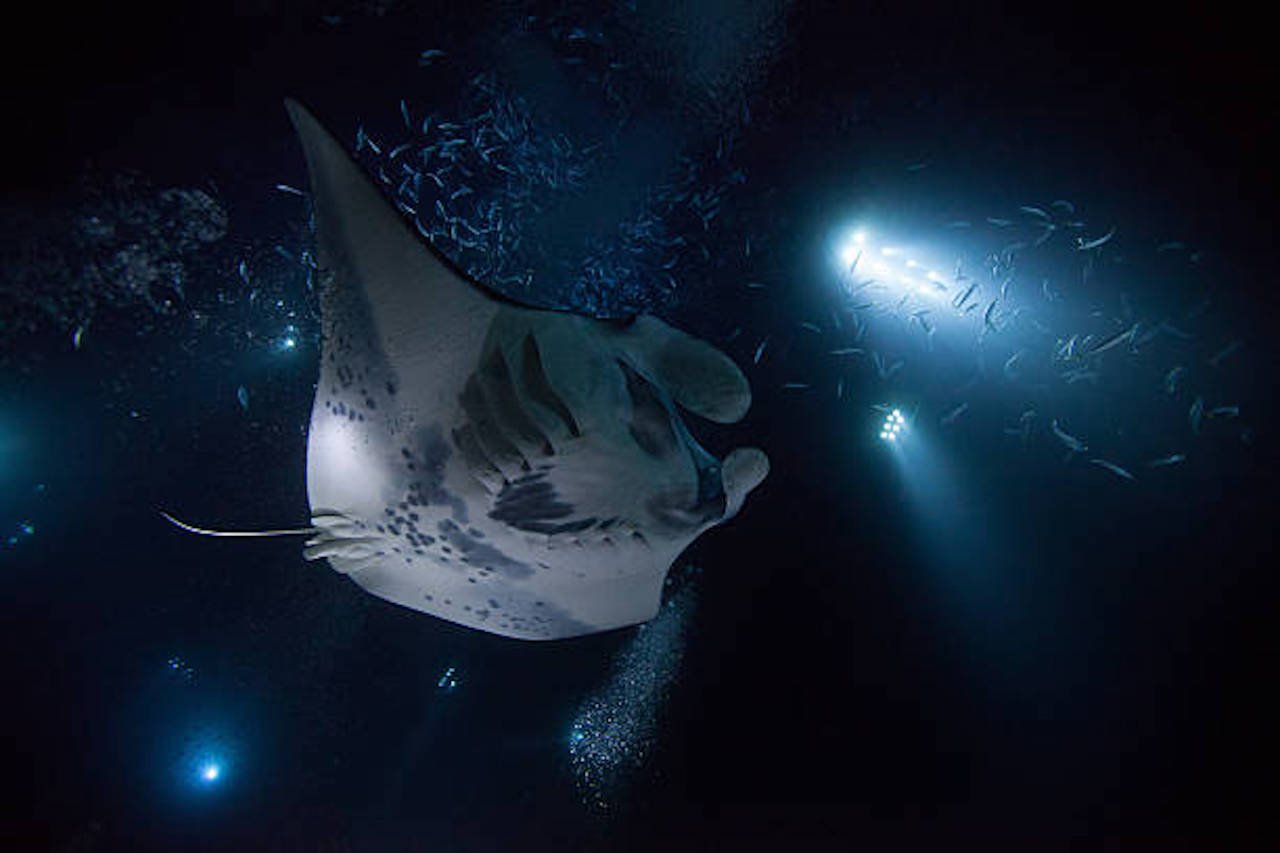
The manta rays that glide through the waters off Kailua-Kona possess wingspans reaching four metres, yet they filter-feed on organisms barely visible to the human eye. Each evening along the Kona Coast, hotels and dive operators position underwater lights at designated sites, creating vertical columns of illumination that attract plankton blooms. The mantas spiral upward through these feeding stations in barrel-roll patterns, their cephalic fins funneling microscopic prey toward cavernous mouths. This phenomenon emerged in the 1970s when resort lighting accidentally concentrated plankton near shore. Marine biologists recognised the feeding aggregation and worked with operators to establish protocols that protect the animals while allowing observation. The sites lie in thirty to forty-five feet of water, accessible only by commercial vessel. Currents shift with lunar cycles, and captains adjust anchor positions nightly based on real-time conditions and manta movements tracked by spotter crews. Hawaii hosts two manta species. The reef manta frequents these Kona sites year-round, while the larger oceanic manta passes through seasonally. Individual animals carry distinctive ventral markings, and researchers maintain identification databases spanning decades. Some mantas return to the same feeding sites for over twenty years. The Kona population represents one of the highest-density resident aggregations in the Pacific, with regular sightings of twelve to fifteen animals per night during peak activity windows between October and April. Water temperature holds steady at 25°C. Visibility ranges from fifteen to thirty metres depending on plankton density and swell direction. The feeding stations occupy lava shelf terrain where the seafloor drops gradually before reaching deeper channels. Coral coverage remains sparse due to historical lava flows, but the substrate supports sponges, urchins, and reef fish that occupy crevices in the porous rock. Tour operators follow strict no-touch guidelines established by NOAA and enforced through permit conditions that govern all manta ray dive Hawaii operations along this protected coastline.

"Some mantas return to the same feeding sites for over twenty years."
Your experience

What a tour day looks like

A step-by-step walkthrough of the visit — what you'll see, how long each stage takes, and the details that matter.

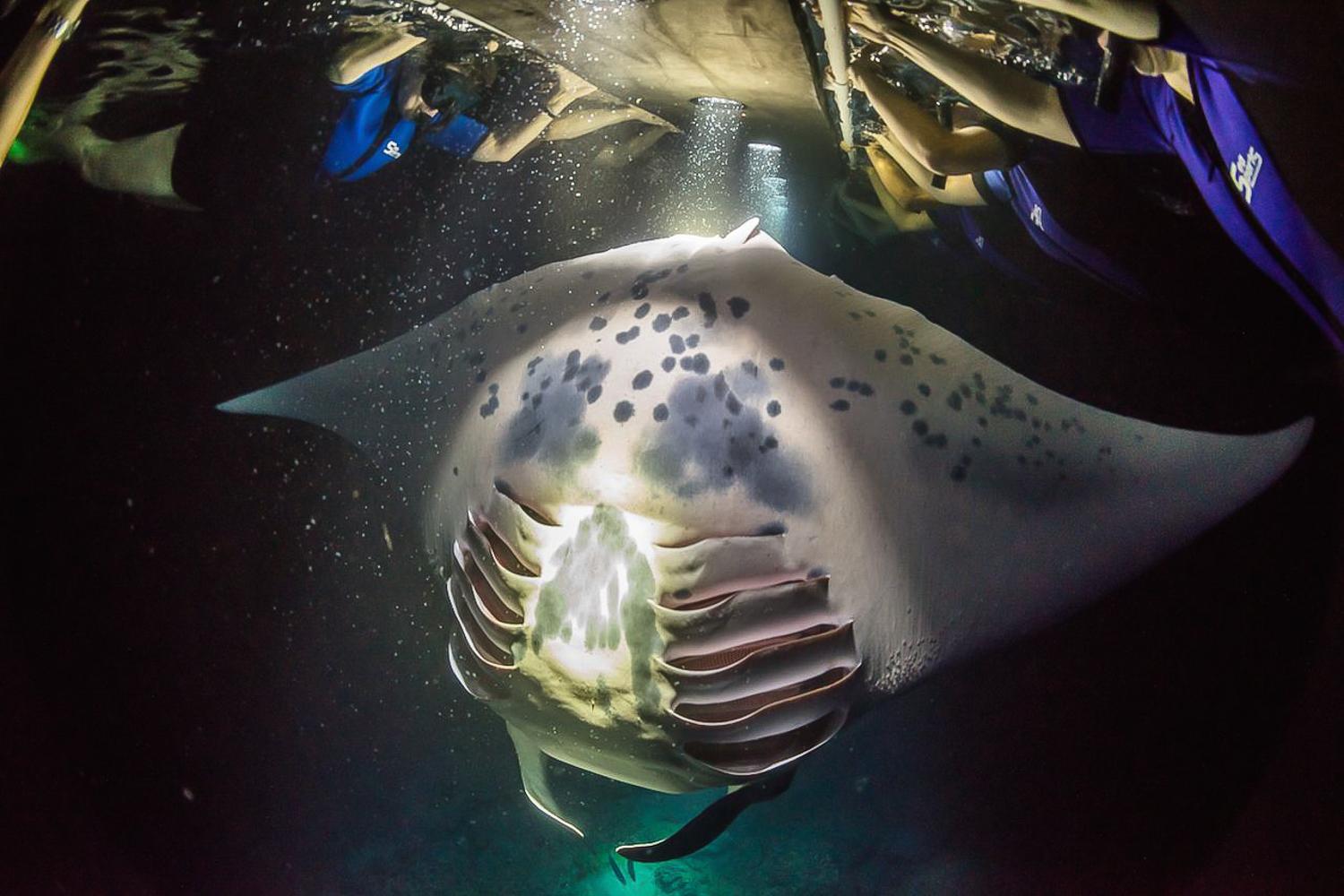
You board at Honokohau Harbor as twilight fades, the boat motoring south past resort coastline toward open water. The captain briefs surface protocols and hands out snorkel gear while crew members test underwater LED arrays that will be deployed on arrival. Twenty minutes out, the engines throttle down. Anchor lines drop, lights descend, and within minutes the first manta appears as a dark silhouette against the blue glow. You slip into the water and join the floating perimeter marked by surface buoys. The cold initial shock gives way to focus as a reef manta sweeps past at arm's length, its white ventral chevron pattern stark under the lights. Another joins, then three more, executing synchronized loops that bring them within inches of your mask. Their gill slits flex with each pass, filtering the plankton cloud you can see swirling in the light beams. The mantas ignore your presence entirely, intent on feeding. You float motionless, watching barrel rolls and sudden directional pivots as they track concentrations of prey. Occasionally a manta rises so close you instinctively pull back, though contact never occurs. After forty minutes the activity slows. The boat crew signals ascent. You climb the ladder as the last manta glides into darkness beyond the light field.

Frequently asked

Frequently asked questions about manta ray dive hawaii tours

What are the manta ray dive hawaii operating hours?

The Kona Coast locations are accessible 24/7, though commercial manta ray dive hawaii operations follow their own daily schedules.

Are manta ray dive hawaii tickets included in the free entry?

Entry is 0 USD, but you must pay for a commercial boat tour to reach the sites.

What is the best arrival window for manta ray dive hawaii?

Arrive between 17:30–20:30 for the best manta ray dive hawaii feeding activity.

Is snorkeling with manta rays safe?

Yes, manta rays are filter feeders and gentle, but always follow your guide’s instructions.

What should I bring for a manta ray dive hawaii tour?

Bring a towel, warm clothes, and a waterproof camera for your manta ray dive hawaii trip.

Can children join a manta ray dive hawaii tour?

Most tours welcome children who are strong swimmers; confirm age limits with your operator.

Are cameras allowed on a manta ray dive hawaii boat?

Yes, GoPro or waterproof cameras are highly recommended for capturing your manta ray dive hawaii adventure.

How do I reach the manta ray dive hawaii locations?

Most tours depart from Honokohau Marina or Keauhou Bay via commercial vessels.

Is a manta ray dive hawaii experience weather-dependent?

Yes, safety and visibility depend on ocean conditions; operators will advise on schedule changes.

What happens if we do not see mantas?

Policies vary, but many operators offer options for rebooking if no rays are sighted during your manta ray dive hawaii tour.