
2 hr 30 min
Night Manta Ray Snorkel Adventure
Float above majestic manta rays as they feed beneath glowing lights in Hawaii's dark waters
Reserve
Hand-picked by our editors — only the best 5 night snorkel experiences from 18 reviewed.
Verified partners for every tour, free cancellation where available, and instant confirmation on every booking.
2 hr 30 min
Float above majestic manta rays as they feed beneath glowing lights in Hawaii's dark waters
Reserve
2 hr
Float above graceful manta rays as they glide through Kona's illuminated waters on this unforgettable evening adventure
Reserve
1 hr 15 min
Glide alongside graceful manta rays feeding under moonlight on this unforgettable Hawaiian snorkel adventure.
ReservePrices from verified partners. Availability updates in real time at checkout. Free cancellation policies apply where shown.
The landmarks, rooms, and views travelers on this tour remember — all visible on a single visit.
A historic feeding site off the coast of Keauhou Bay where manta rays have been sighted since the 1970s.
Located near Honokohau Harbor, this site is a prime spot for observing the nocturnal feeding rituals of these giants.
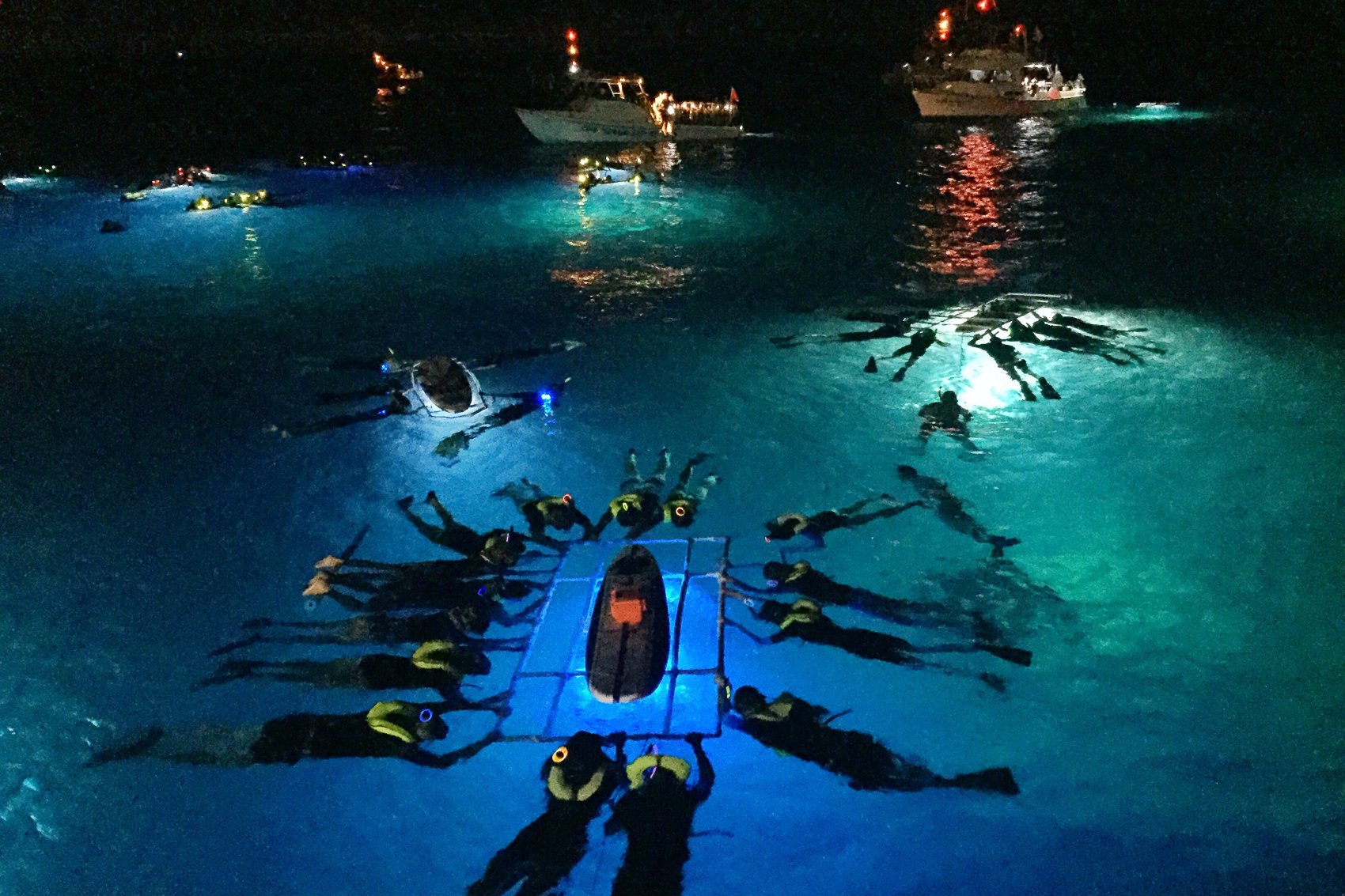
Specialized light rafts used by snorkelers create a stable environment for mantas to feed on plankton.
The volcanic landscape provides a dramatic backdrop for the sunset boat rides preceding the snorkel.
The concentration of microscopic organisms is the key factor that draws hundreds of manta rays to the area nightly.
In-water snorkeling provides an immersive encounter with marine life, whereas viewing from the boat offers a comfortable, dry observation point. They complement each other; most visitors who do both call snorkeling the more thrilling choice for observing the oceanic giants up close.
| Feature | Top pick Manta Ray Snorkeling | Manta Ray Night Viewing |
|---|---|---|
Experience Type |
Active immersion | Passive surface observation |
Water Entry |
Directly into ocean | Not required |
Gear Requirements |
Mask, snorkel, fins | No equipment needed |
Physical Demand |
Moderate swimming effort | None |
Proximity to Rays |
Direct surface encounter | Viewed from deck |
Ideal For |
Active marine enthusiasts | Comfort-focused spectators |
| See tickets → |
Verdict: Choose manta ray night snorkeling hawaii big island tours for direct interaction, or opt for the manta ray night snorkeling hawaii big island tour boat alternative if you prefer to remain dry while observing the manta ray night snorkeling hawaii big island tickets experience from above.
Choose your ticket, select your date, and reserve in under two minutes. Secure checkout handled by our verified partner.
Instant confirmation by email, with a mobile voucher you can save offline. No printing, no queuing at a collection desk.
Arrive at the entrance, show your voucher on your phone, and walk in. Most tickets include priority or skip-the-line access.
Practical details for your visit straight from our verified partners — hours, access, rules, and how to get there.
Wear your swimsuit under your clothes for faster boarding. Bring a warm jacket or sweatshirt for the chilly return boat ride.
Keep items in a small, waterproof dry bag. Avoid large beach bags as space on tour boats is limited.
Underwater cameras with flash disabled are permitted. Always ensure your gear is secure to avoid losing it in the dark water.
Access to manta ray night snorkeling hawaii big island requires climbing onto a boat. Guests should be comfortable swimming in open, dark water.
Children aged 5+ are typically welcome on manta ray night snorkeling hawaii big island tour experiences. Parents should evaluate their child's comfort in deep, dark ocean conditions.
Eat a meal before departure as snacks provided on board are minimal. Stay hydrated with water before your manta ray night snorkeling hawaii big island excursion.
Best time to go, insider tips, nearby landmarks, and the cancellation fine print — flip through to skim what matters to you.
Flexible, no hidden fees.
Tours typically offer flexible rebooking if sightings are not achieved. Check specific operator terms as entrance to the ocean via commercial boat requires pre-booked manta ray night snorkeling hawaii big island tickets.
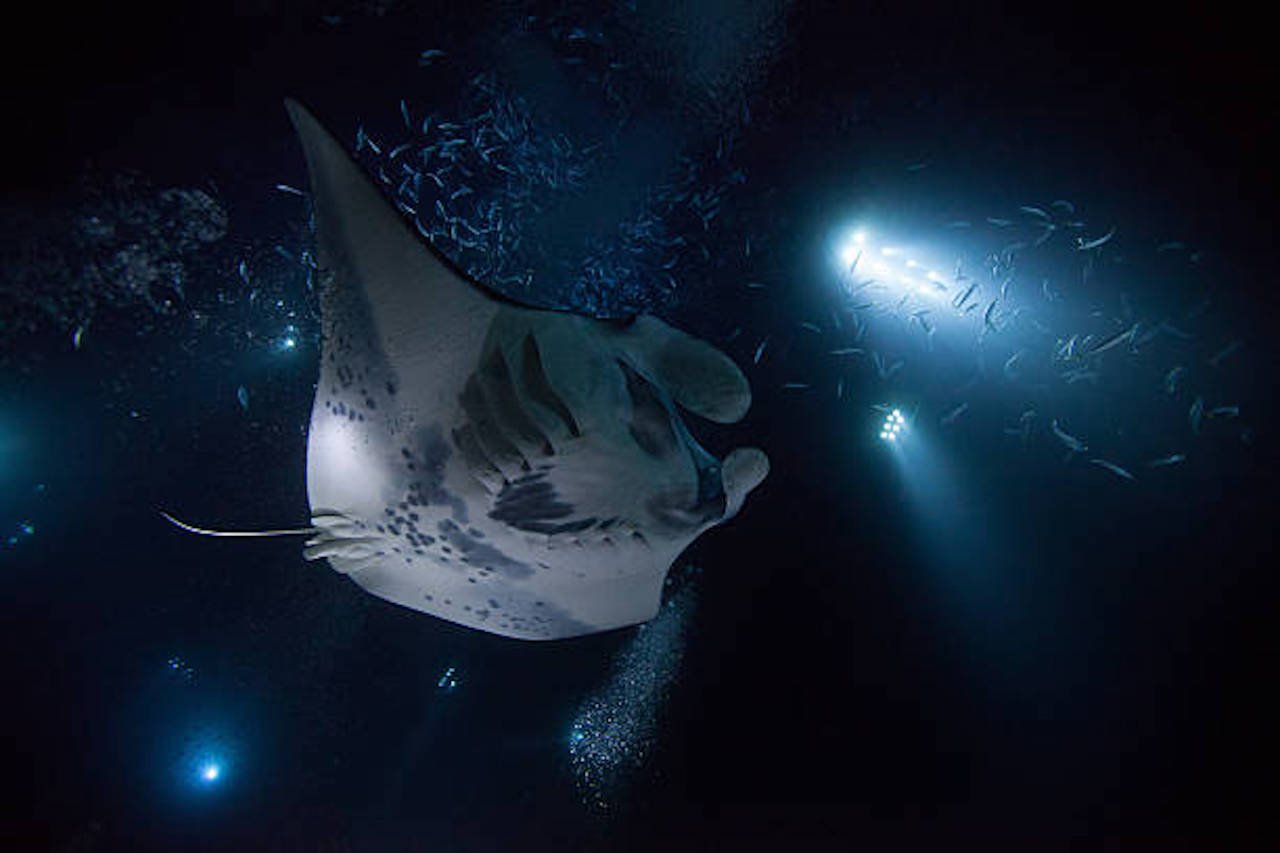
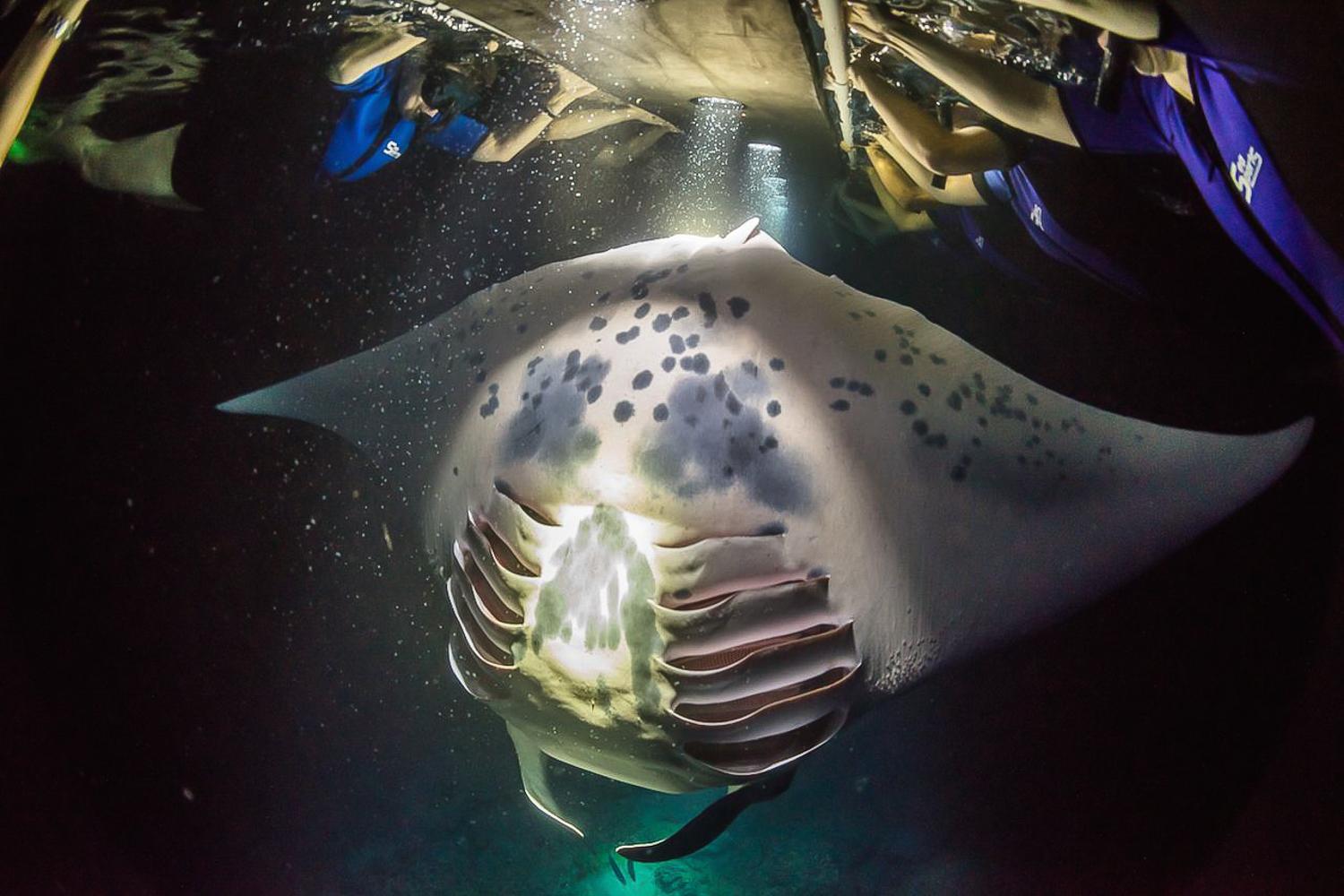
The manta rays congregating nightly off Kona's coast belong to a resident population identified by unique ventral markings, with some individuals returning to Keauhou Bay and Honokohau Harbor feeding sites for over two decades. These cephalopods, reaching wingspans of fourteen feet, arrive after dark when phytoplankton rise toward artificial lights positioned by snorkel operators, creating vertical feeding columns visible from the surface. The behavior was documented systematically beginning in the late 1990s, and by 2026 the sites host multiple permitted vessels each evening, operating under strict no-touch protocols enforced by state marine officers. Manta ray night snorkeling Hawaii Big Island tours depart between 17:30 and 20:30, timed to coincide with peak plankton density in the two-hour window following sunset. Keauhou Bay, a crescent of black sand flanked by lava rock, offers calmer conditions and shallower water—ideal for novice snorkelers. Honokohau Harbor serves as the launch point for open-ocean sites where stronger swimmers encounter mantas in deeper water, often alongside reef sharks and occasional Hawaiian monk seals. Both locations fall within protected marine zones where anchoring is prohibited and engine noise regulated. The ecological mechanics are precise: phytoplankton follow circadian rhythms, ascending toward surface light as photosynthesis ceases. LED arrays mounted beneath floating platforms simulate moonlight, concentrating microscopic organisms into dense clouds. Mantas glide in barrel rolls, mouths agape, filtering hundreds of gallons per pass. Each animal's cephalic fins funnel water toward gill rakers that strain plankton while expelling seawater through ventral slits. The process is silent, visible only as shadow and motion beneath snorkelers suspended at the surface. Commercial access to manta ray night snorkeling sites requires permits issued by the Hawaii Department of Land and Natural Resources, limiting the number of simultaneous vessels to prevent crowding and light pollution. Operators provide wetsuits rated for 75-degree water, prescription masks, and submersible lights. Boats range from six-passenger rigid inflatables to thirty-passenger catamarans, with departure harbors selected based on swell direction and wind forecast. The experience has no terrestrial equivalent—free entry to the ocean, but practical participation dependent on licensed commercial transport departing nightly from Kailua-Kona.
"Each animal's cephalic fins funnel water toward gill rakers that strain plankton while expelling seawater through ventral slits."
A step-by-step walkthrough of the visit — what you'll see, how long each stage takes, and the details that matter.
You board at Honokohau Harbor as daylight fades, the westward horizon still bronze above Hualalai's silhouette. The rigid inflatable clears the breakwater and runs north along the Kona coast, passing shoreline resorts lit against black lava. Twenty minutes offshore, the captain cuts the engine and crew deploy a floating platform ringed with submersible LEDs. You pull on a wetsuit and mask, then slide backward into water that feels like bathwater against September air. You float facedown, arms extended along a foam float, finning gently to hold position above the light array. The water column below glows pale green, dense with drifting specks. Then the first manta appears—a dark chevron gliding upward through the plankton cloud, cephalic fins unfurled. It banks three feet beneath you, close enough to count the gill slits along its white belly, then loops back through the column. A second manta joins, then a third, their wingbeats slow and hydraulic. You hold your breath and dip your masked face deeper, watching the barrel rolls repeat. The boat's hull creaks above you. Other snorkelers float in a loose ring, their lights merging into a diffuse halo. The mantas circle for thirty minutes, unbothered, before drifting into the dark water beyond the platform's glow.
Manta Ray Snorkeling sites are accessible 24 hours via commercial boats, with peak operation occurring during the 17:30–20:30 arrival window.
Yes, you must book with a licensed commercial tour boat to access the sites as they are in the open ocean.
The best arrival window is 17:30–20:30 to ensure you are in position for optimal darkness and nocturnal feeding activity.
Most operators allow children 5 and older; check specific company policies regarding swimming proficiency and ride-along options.
No, this is a nocturnal experience; manta ray night snorkeling hawaii big island encounters rely on artificial lights to attract plankton after dark.
No, it is dangerous and prohibited to swim from shore; you must book a guided manta ray night snorkeling hawaii big island tour for safety.
Bring a swimsuit, towel, warm jacket for the return boat ride, and a dry bag for personal items.
Most boats do not have full restrooms; please use facilities at the harbor before departure.
Both are excellent; Manta Village (Keauhou Bay) and Manta Heaven (near Honokohau Harbor) both offer reliable sightings.